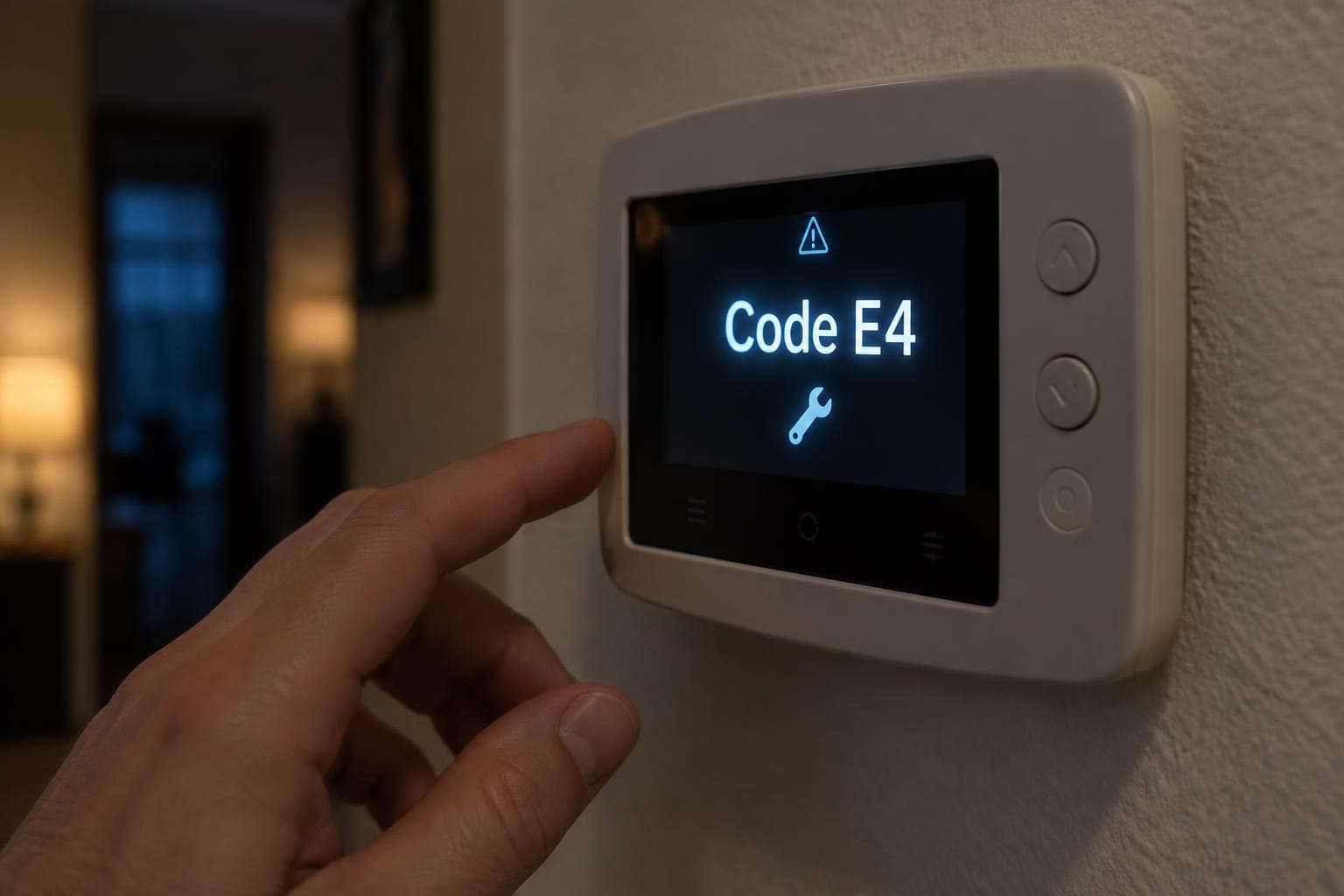
An alert on the thermostat can be useful, but there is no universal HVAC code dictionary. The same number or abbreviation can mean different things on different brands and models. The full message and equipment model matter more than a search result for a code alone.
Common Types of Alerts
Maintenance reminders may ask you to inspect a filter or schedule service. Some are time-based reminders, not proof a sensor detected a dirty filter.
Connection or power alerts can point to Wi-Fi, app, thermostat power, or communication between compatible components. A lost internet connection does not necessarily mean the heating or cooling equipment has stopped.
Equipment faults may involve a safety limit, sensor, compressor, furnace ignition sequence, or another operating issue. The thermostat may only be reporting a fault generated elsewhere in the system. Do not bypass a lockout or repeatedly clear the warning to force another start.
What to Record
Photograph the entire screen, including words around the code. Note the thermostat make and model, the indoor and outdoor equipment model numbers if readily accessible, the time the alert appeared, and what the system was doing. Check the *manual for that exact model* for the manufacturer's interpretation. A professional can then evaluate the underlying cause, not just erase the notification.
If the system is not heating or cooling, check ordinary settings and the filter first. If the alert returns or comfort is affected, arrange service. For gas odor, leave the home and call the gas utility or emergency services from outside. For an electrical burning smell, stop using the equipment and request urgent help.
For help interpreting an alert in the context of your equipment, contact NexAir Solutions. Learn more about standard and communicating controls.
Further reading: Carrier thermostat troubleshooting guidance.