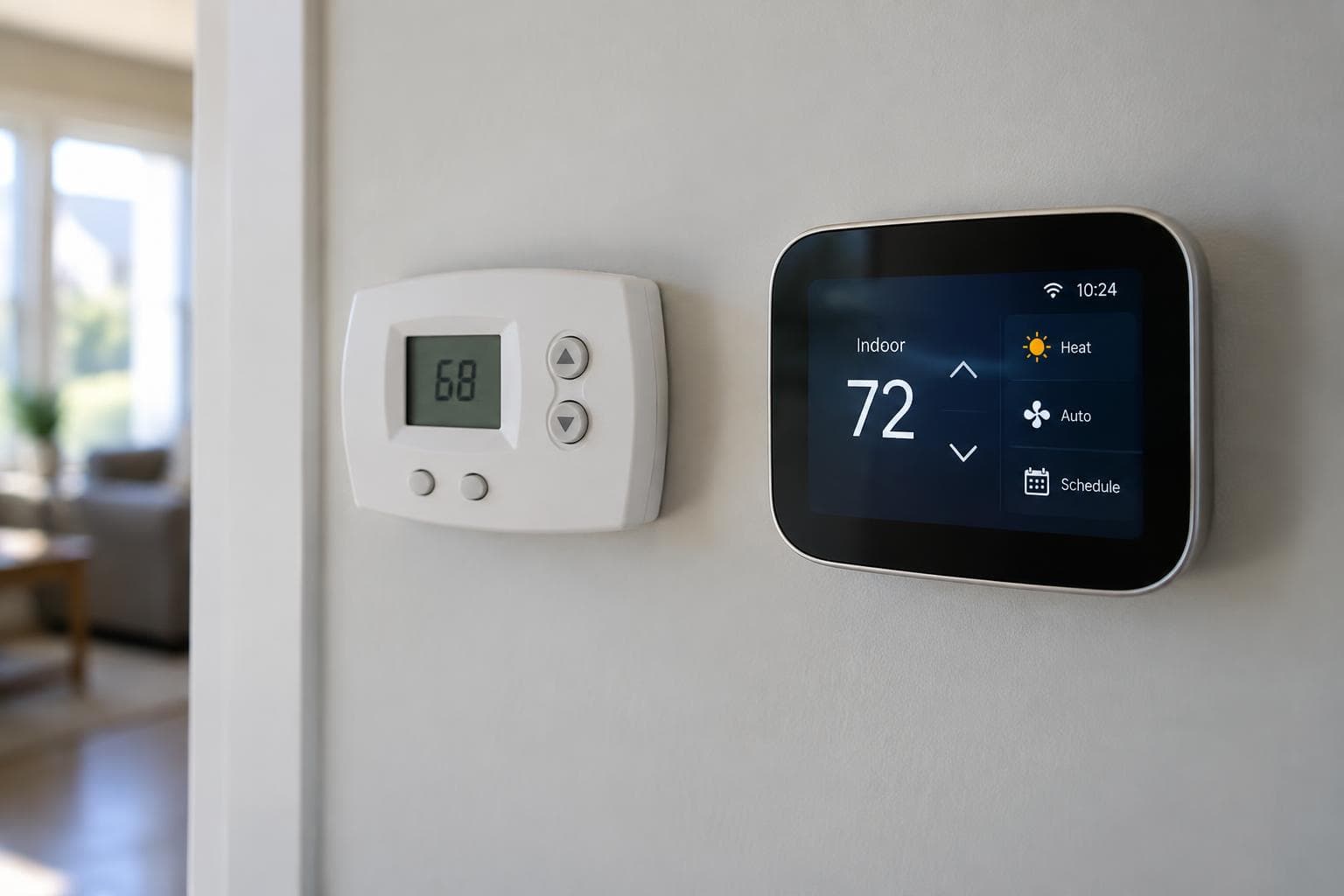
Thermostats can look similar on the wall while talking to equipment in different ways. A Wi-Fi connection or app does not by itself make a thermostat a *communicating* control.
Standard Controls
Many conventional thermostats use individual low-voltage connections to request heating, cooling, fan operation, and sometimes equipment stages. A smart thermostat can use these same conventional connections while adding schedules, remote access, and other features. What it can control depends on the wiring and the equipment attached.
Communicating Controls
A communicating control exchanges more detailed information with compatible indoor and outdoor equipment through a manufacturer-defined system. Depending on the model, it may coordinate variable operation, display diagnostic information, or manage humidity and accessories more closely. Those features require compatible components and correct setup; a communicating thermostat is not universally interchangeable with another brand's equipment.
Which Is Right for Your Home?
If your existing system uses conventional controls and does everything you need, a compatible standard thermostat may be a straightforward choice. If you are installing matched variable-capacity equipment, the specified communicating control may be needed to deliver its intended functions. Ask the installer exactly which features work with the quoted combination and what happens if one component is replaced later.
Before purchasing a thermostat, get the indoor and outdoor model numbers, identify whether your present control is communicating, and have a professional confirm compatibility. Swapping a proprietary communicating control for a generic smart thermostat can lose features or prevent proper operation.
For help choosing controls around the system you actually own, explore our connected-home service or contact NexAir Solutions.