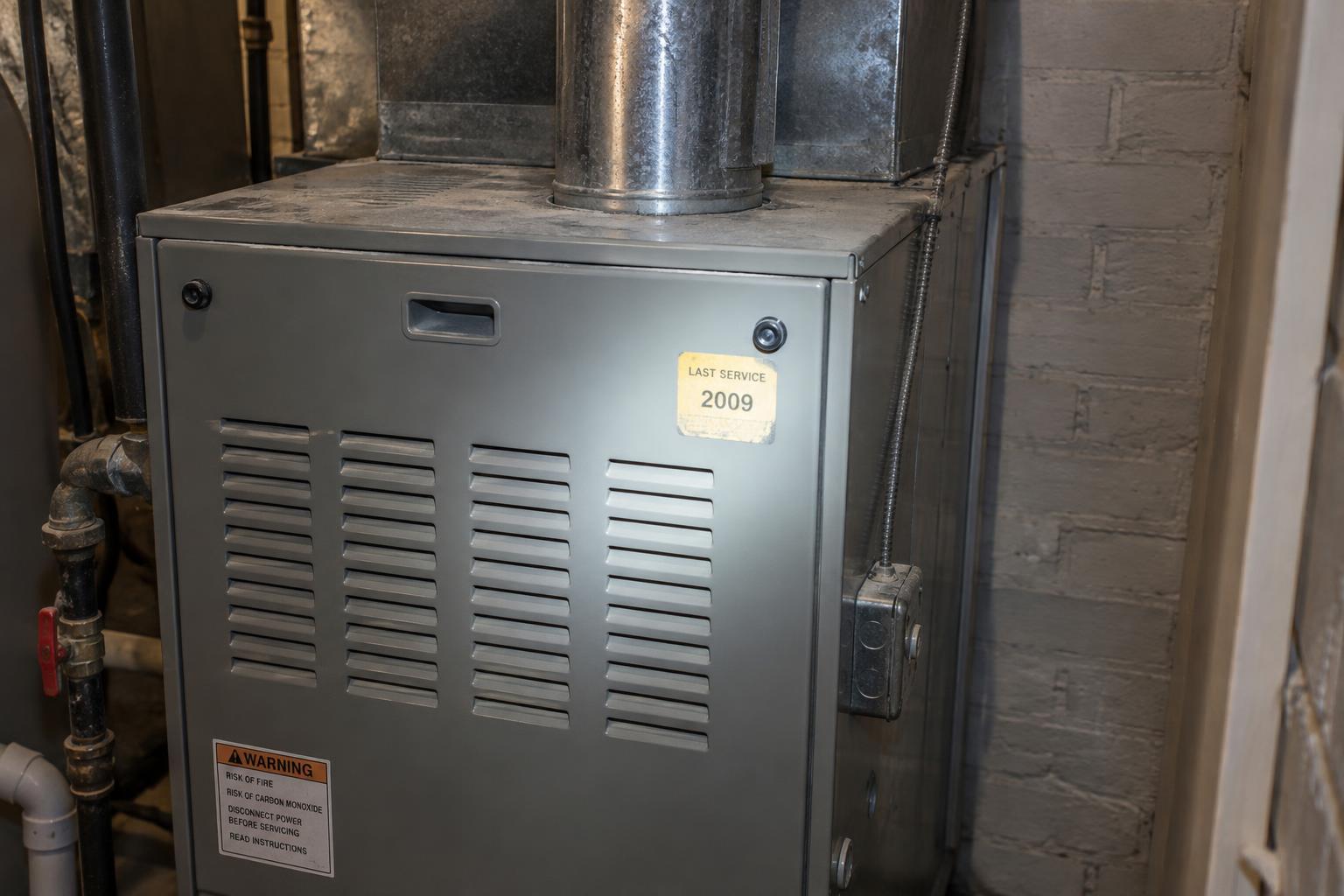
There is no expiration sticker on a furnace. Around 15 to 20 years is a useful point to begin planning for replacement, but actual service life varies widely. Houston's milder heating season does not guarantee a furnace will last longer: installation quality, maintenance, corrosion, duct airflow, and individual parts all matter.
Age Is Only One Part of the Decision
Check the equipment label and maintenance records to establish age. Then consider how reliably it starts, whether rooms heat evenly, the cost and frequency of repairs, and what a qualified technician finds during a safety inspection. Replacing a furnace solely because it turned a certain age can be premature; repeatedly repairing a system with significant safety or reliability problems can be false economy.
Signs to Request an Assessment
Never infer heat-exchanger condition from age alone. A technician needs to inspect and test the system. If a carbon monoxide alarm sounds, leave and call emergency services from outside.
Plan for the Whole Home
Before choosing a replacement, ask about heating load, duct condition, cooling-system compatibility, venting, controls, and whether a heat pump or dual-fuel setup makes sense. Our heat pump vs. furnace comparison walks through those choices. For an honest repair-or-replace assessment, contact NexAir Solutions.
Further reading: U.S. Department of Energy HVAC renovation guide.