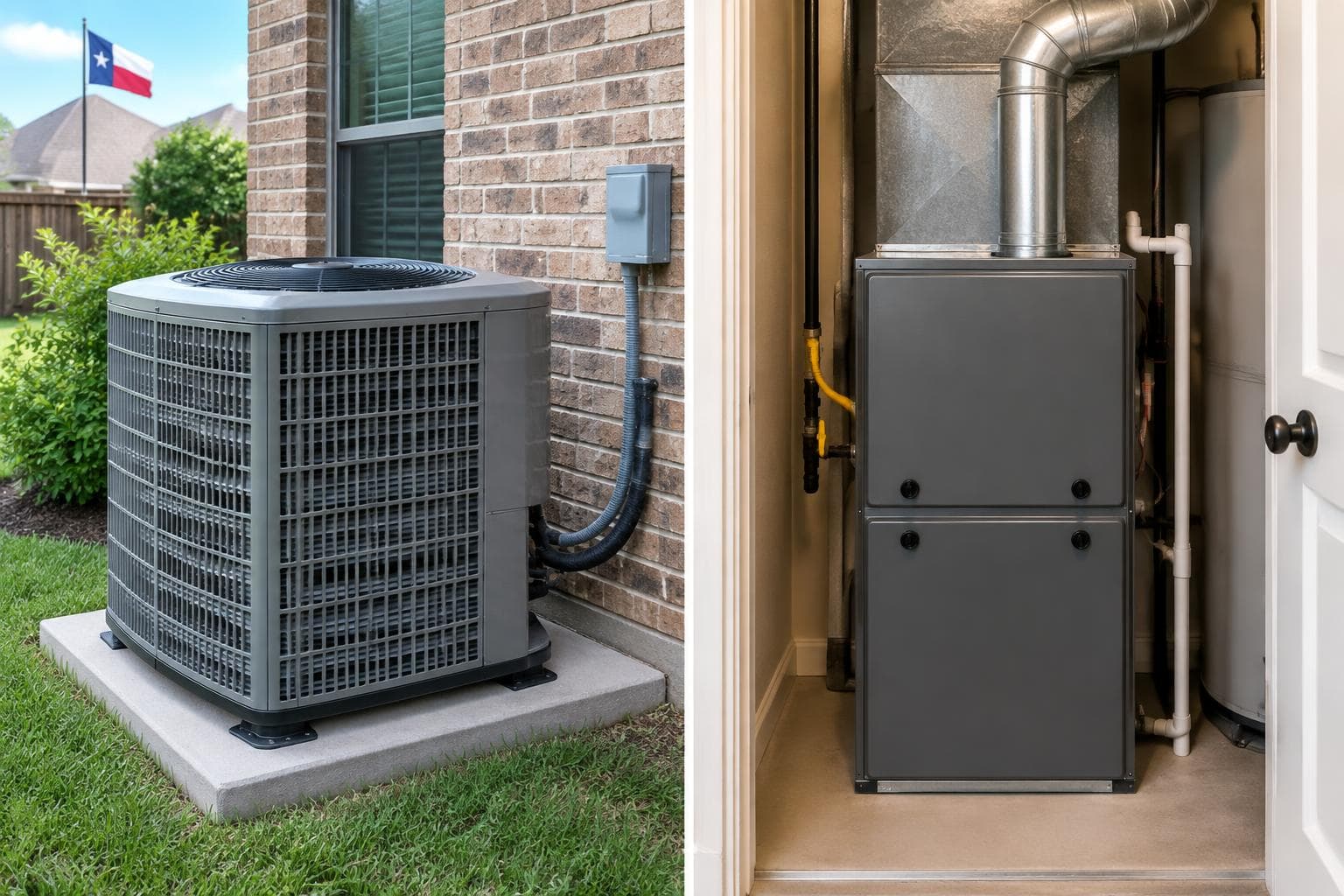
Houston homeowners spend more time thinking about cooling than heating. But when a system needs replacing, the heating choice affects the cooling equipment, utility bills, and comfort for years. A heat pump and a gas furnace both heat a home; they do it in very different ways.
How Each System Works
An electric heat pump moves heat from outdoor air into your home. In summer, it reverses direction to cool. A gas furnace burns fuel to heat air, typically paired with a separate air conditioner for summer. A dual-fuel setup combines a heat pump with a gas furnace and switches between them according to the controls and outdoor conditions.
Where a Heat Pump Makes Sense
Our relatively mild heating season gives an air-source heat pump plenty of opportunities to operate efficiently. It can be especially appealing if you currently heat with electric resistance, need both heating and cooling replaced, or prefer an all-electric home. Ask how the proposed equipment handles Houston humidity in cooling mode, not just how it heats.
Heat pumps still operate in cold weather, but capacity and efficiency vary by model and temperature. Some systems use auxiliary electric heat; the setup and controls matter during a cold snap.
Where a Furnace Makes Sense
Keeping a functioning gas furnace may be sensible if your cooling equipment needs replacement first. A new furnace can also fit a home with an existing gas connection and a preference for gas heat. Compare the full installed cost, expected fuel use, and the condition of your ducts. Neither fuel is automatically cheaper at every address or under every utility rate.
Questions to Ask Before Choosing
If you are comparing a heat pump with *AC plus furnace*, see our Houston heat pump vs. AC guide. For an equipment recommendation grounded in your house rather than a generic winner, talk with NexAir Solutions.
Further reading: U.S. Department of Energy, Heat Pump Systems.