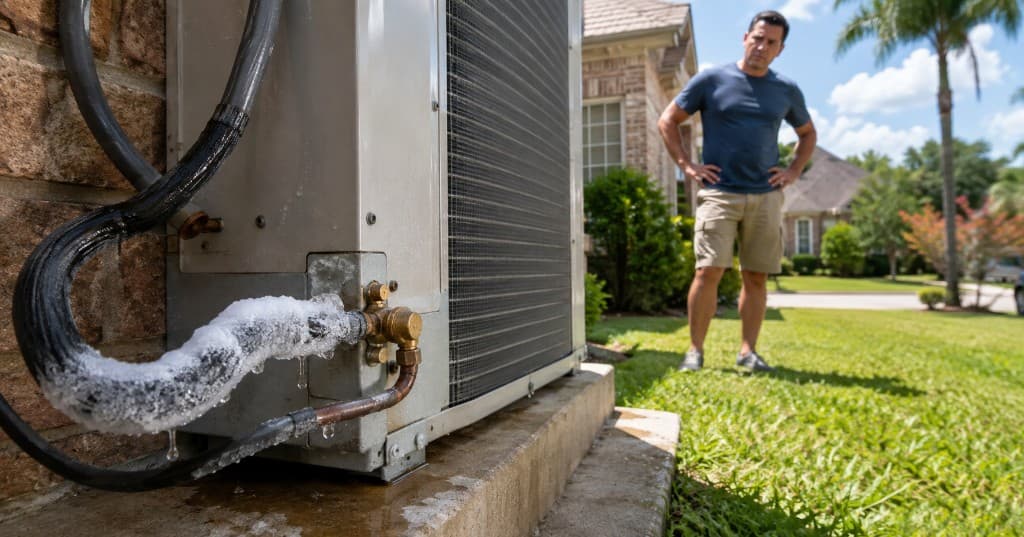
Refrigerant is the working fluid that moves heat out of your home. It does not get “used up” like fuel. If levels are low, there is usually a leak. In Houston’s long cooling season, a slow leak can quietly turn into weak cooling and higher bills.
Why Refrigerant Level Matters
Your AC needs the right charge to absorb and reject heat efficiently.
When refrigerant is low:
Comfort problems often appear before a complete breakdown.
Common Signs Homeowners Notice
A refrigerant leak does not always look dramatic.
Watch for:
One sign alone is not proof, but several together deserve inspection.
Why “Just Adding Refrigerant” Is Not Enough
Topping off refrigerant without finding the leak is a temporary patch.
Problems with fill-only service:
A proper repair finds and addresses the leak path whenever practical.
What Can Cause Leaks
Leak points vary by system age and installation quality.
Possible sources include:
Technicians use leak detection methods suited to the equipment and symptoms.
Refrigerant Type Affects Service Options
Older and newer systems may use different refrigerants.
That can influence:
Ask your technician to explain what your system uses and what options are realistic.
What You Should Do If You Suspect a Leak
Keep safety and equipment protection in mind.
Practical steps:
Refrigerant handling requires proper certification and tools.
When to Call for Diagnosis
Contact a professional if:
Low refrigerant is a symptom, not the full diagnosis. If your Houston AC shows signs of a refrigerant leak, contact NexAir Solutions for leak detection and repair guidance.