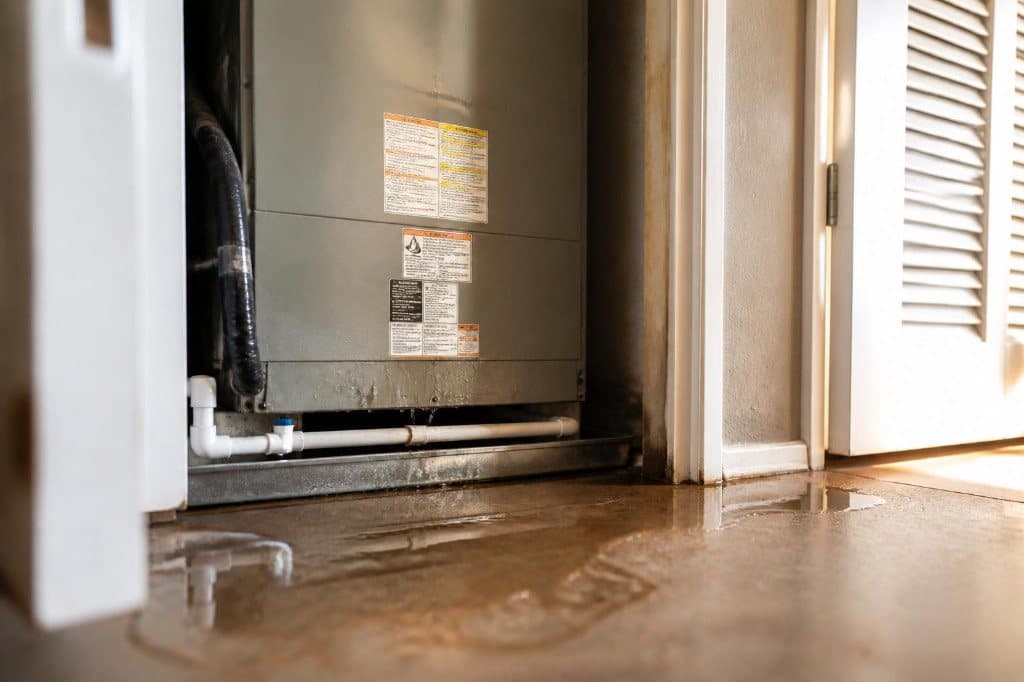
During Houston summer, your AC removes a lot of moisture from the air. That water should drain away quietly. When it pools near the indoor unit, drips from the ceiling, or triggers a shutdown, the condensate system needs attention.
How AC Drainage Is Supposed to Work
Your system cools air over the evaporator coil. Moisture condenses and collects in a drain pan, then flows out through a condensate line.
When drainage works correctly:
Problems show up when that path gets blocked or the pan overflows.
A Clogged Condensate Line Is the Most Common Cause
Algae, dust, and sludge can build up inside the drain line, especially in humid climates.
Warning signs include:
A clogged line can cause overflow even when the AC itself is cooling well.
Dirty Filters Can Add to the Problem
Restricted airflow can contribute to freezing, then thawing, which creates extra water the drain must handle.
Check for:
Replace a dirty filter first, then watch whether the leak continues.
Float Switches Are There for Protection
Many systems include a safety switch that shuts the AC down when water rises too high.
If the AC suddenly stops cooling:
The switch helps prevent larger water damage, but the underlying drain issue still needs fixing.
What You Can Safely Check at Home
A few homeowner steps are reasonable before calling a technician.
Safe checks:
Avoid pouring harsh chemicals into the drain or taking apart sealed components unless a professional guides you.
When Water Leaks Become Urgent
Call for service promptly if:
In Houston humidity, waiting too long can turn a drain clog into ceiling damage or mold concerns.
Prevention During Peak Cooling Season
Regular care reduces the chance of mid-summer leaks.
Helpful habits:
A condensate leak is usually a drainage problem, not a reason to ignore cooling performance. If your AC is leaking water in Houston, contact NexAir Solutions for inspection and repair before the issue spreads.