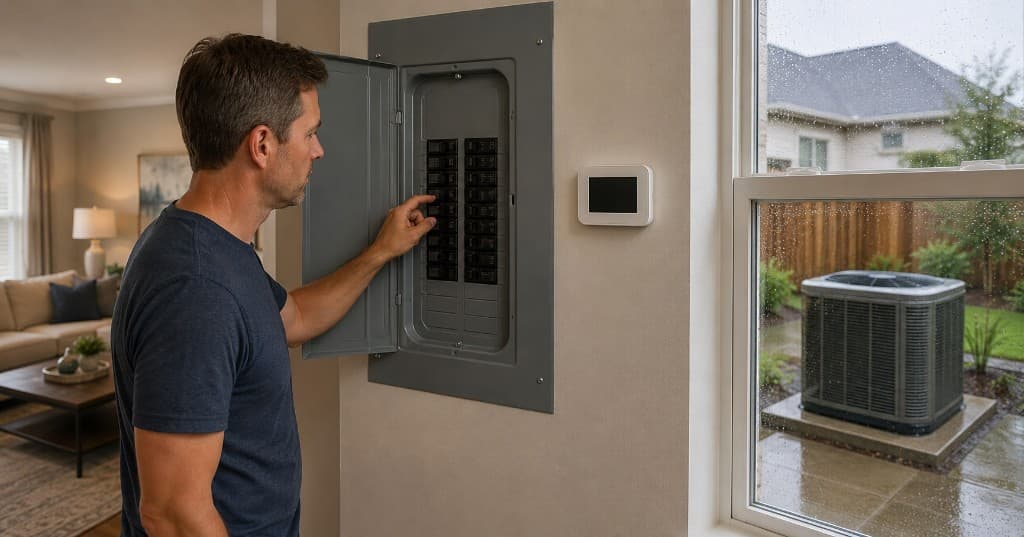
After a Houston storm, restoring cooling is a top priority. Restarting too quickly, or after water exposure, can create safety and equipment risks. A careful sequence protects your home and your HVAC system.
Wait for Stable Power
Flickering power can damage motors and controls.
Before restarting:
Stable power is the first requirement for a safe restart.
Inspect for Water and Debris First
Storms can soak equipment or throw debris into the outdoor unit.
Do not restart if:
Flood-exposed systems need professional evaluation before use.
Clear the Outdoor Unit Safely
If the unit stayed dry, remove obvious hazards.
Safe steps:
Do not force bent fan blades or open electrical panels yourself.
Restart in Stages
A controlled restart helps you catch problems early.
Suggested sequence:
1. Set the thermostat to off
2. Confirm breakers for the furnace/air handler and outdoor unit are on
3. Switch the thermostat to cool with a moderate setpoint
4. Listen for normal indoor and outdoor startup sounds
5. Check that air from vents begins to cool
6. Watch for breaker trips, burning smells, or no outdoor operation
If anything seems wrong, turn the system off and call for service.
Watch Humidity and Odors After the Storm
Stormy weather can raise indoor moisture and musty smells.
After restart, notice:
Replace a dirty or damp filter before running the system for long periods.
Common Post-Storm AC Problems
Some issues appear only after the first restart attempt.
Frequent problems include:
Early diagnosis prevents multiple failed restart attempts.
When to Call Immediately
Contact a professional if:
Storm recovery should protect safety first, then comfort. For post-storm AC inspection or restart help in Houston, contact NexAir Solutions.