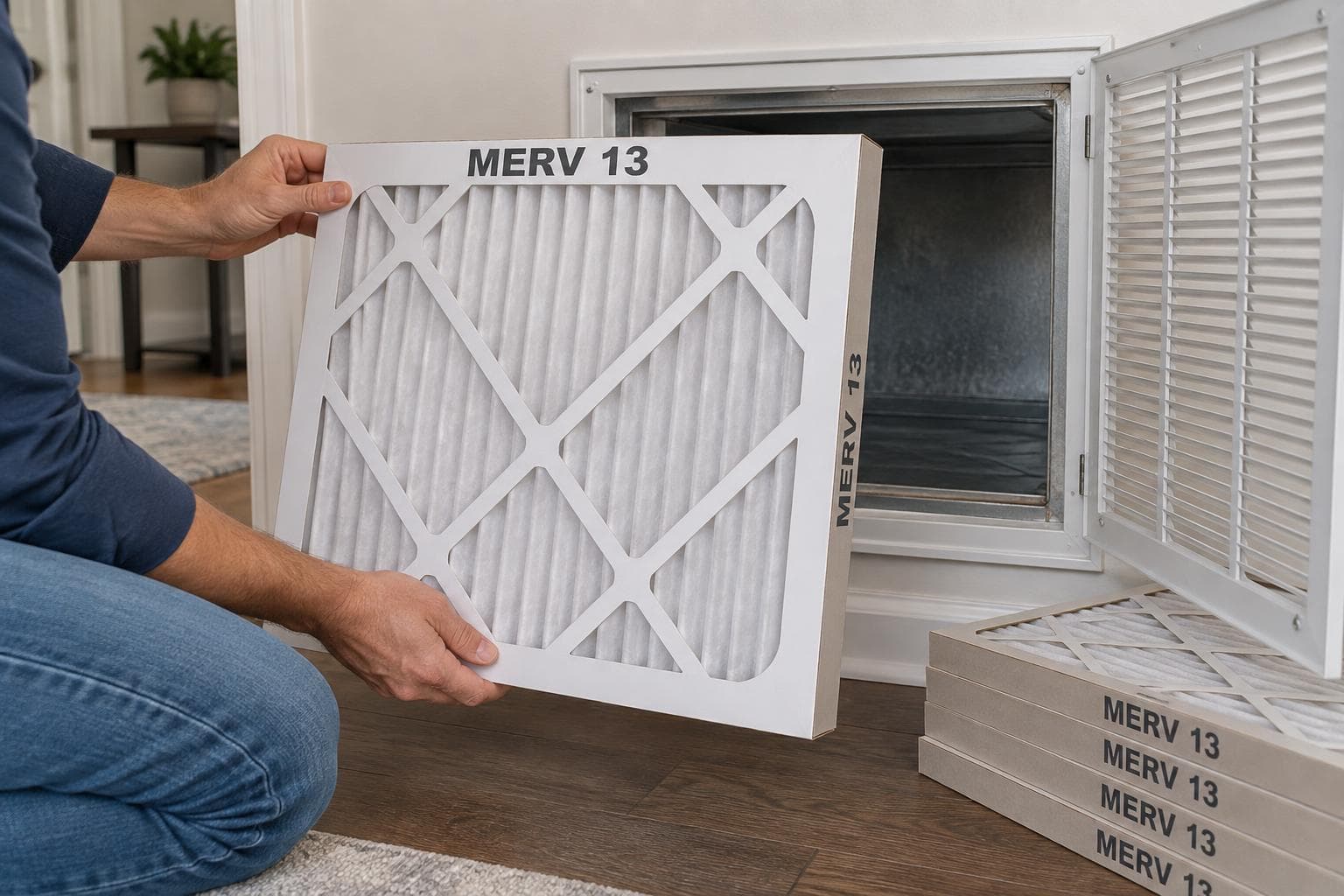
Shopping for an HVAC filter often feels like comparing numbers without knowing what they mean. MERV stands for *Minimum Efficiency Reporting Value*. It describes how effectively a filter captures tested particle sizes. A higher number generally captures more of those particles, but fit, maintenance, and system airflow still matter.
What Changes as MERV Goes Up?
Lower-rated filters catch larger debris; higher-rated filters capture a greater share of smaller particles too. That can matter for pollen, dust, smoke particles, and other airborne material. A filter is only effective when air passes through it, so gaps around the frame and overdue changes undermine the rating on the package.
The EPA recommends MERV 13, or the highest rating a system's fan and filter slot can accommodate, when improving filtration. That does not mean every homeowner should put a dense one-inch MERV 13 filter into an unassessed system. Filter thickness, surface area, return sizing, and blower capability affect pressure drop and airflow. Ask a technician to check compatibility if you are upgrading significantly.
MERV Is Not a Filter Size
A 16 x 25 x 1 filter's dimensions and its MERV rating answer different questions. First buy the size that seals properly in the return or filter cabinet. Then choose a rating appropriate for the equipment. A thicker media filter may offer more surface area, but it requires a cabinet designed for that thickness.
Houston Habits That Matter
Long cooling seasons mean the filter sees a lot of airflow. Check it regularly and follow your filter and equipment instructions for replacement. Pets, renovation dust, and heavy use can shorten the interval. If airflow weakened after a filter change, do not assume the system simply needs a still-higher MERV rating.
For selection advice, start with our general filter guide. If comfort or airflow changed after an upgrade, ask NexAir Solutions to evaluate the system.
Further reading: EPA explanation of MERV.