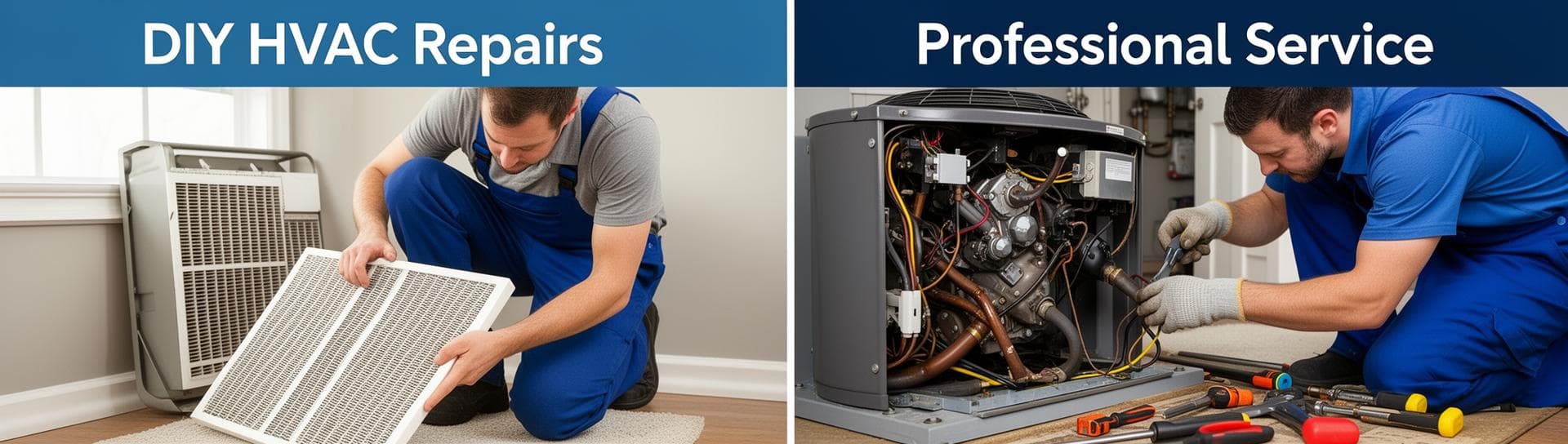
Not all HVAC problems require a professional technician. Some issues can be safely fixed with basic tools and knowledge, while others demand licensed expertise. Knowing the difference saves money and prevents dangerous mistakes. Here's your guide to DIY HVAC fixes versus professional repairs.
DIY Fixes: Safe and Simple
Problems you can handle yourself:
1. Replace Air Filters
Easiest DIY task: Clean filters maintain system efficiency and indoor air quality.
DIY steps:
Frequency: Every 1-3 months, or when dirty.
2. Clean Vents and Registers
Basic maintenance: Remove dust buildup from visible vents.
Cleaning process:
Tools needed: Vacuum, cloth, mild soap.
3. Adjust Thermostat Settings
Simple programming: Correct thermostat operation doesn't require tools.
Common adjustments:
Note: Don't attempt thermostat replacement unless experienced.
4. Clear Outdoor Unit Debris
Safe exterior cleaning: Keep condenser clear of obstructions.
Safe cleaning:
Safety: Never operate unit with debris blocking intake.
5. Check Circuit Breakers
Basic electrical check: Reset tripped breakers safely.
Procedure:
Warning: If breaker trips repeatedly, call electrician.
Professional-Only Repairs: Dangerous or Complex
Require licensed technician:
6. Refrigerant Handling
EPA-regulated: Adding or removing refrigerant requires certification.
Why professional:
Risk: Illegal and dangerous without proper certification.
7. Electrical Repairs
High-voltage danger: HVAC electrical work can cause fires or shocks.
Electrical work includes:
Code: Must comply with NEC and local electrical codes.
8. Gas Line Work
Explosion hazard: Furnace gas connections require specialized knowledge.
Gas system repairs:
Licensing: Requires gas fitter certification.
9. Compressor Replacement
Major component: Compressor work requires extensive HVAC knowledge.
Complex procedures:
Cost: Usually $1,500-$3,000 - not a DIY project.
10. Ductwork Modifications
Building code compliance: Duct changes affect whole-house air distribution.
Professional ductwork:
Impact: Poor ductwork reduces efficiency by 20-30%.
Borderline Fixes: Know Your Limits
May be DIY with caution:
11. Thermostat Replacement
Skill-dependent: Simple mechanical thermostats are DIY-friendly.
DIY potential:
Consider: Wiring colors and voltage must match.
12. Drain Line Cleaning
Usually safe: Clearing condensate drain prevents water damage.
DIY method:
Warning: Don't use chemical drain cleaners - damage drain pan.
13. Belt Replacement
Older systems only: Modern direct-drive systems don't have belts.
Belt replacement:
Risk: Improper installation causes motor damage.
Tools You'll Need for DIY Fixes
Basic HVAC toolkit:
Safety gear:
When to Call a Professional Immediately
Emergency situations:
Health and safety: Never risk injury or property damage.
Cost-Benefit Analysis
DIY savings potential:
Professional value:
Common DIY Mistakes to Avoid
Costly errors:
Prevention: When in doubt, call a professional.
Learning Resources
Improve your knowledge:
Continuous learning: HVAC technology evolves constantly.
Warranty Considerations
Protect your investment:
Insurance: Some home warranties cover HVAC repairs.
Seasonal Maintenance Schedule
Year-round care:
Prevention: Regular maintenance prevents most problems.
Knowing what you can safely fix yourself gives you confidence and saves money on minor issues. However, complex repairs require professional expertise to ensure safety and proper operation. For reliable HVAC service and expert advice in Houston, contact NexAir Solutions today!